Learning to Swim
Lena had always dreamed of seeing the sea. Growing up landlocked among mountains and forests, she had never touched waves or felt sand between her toes. So when her aunts invited her on a trip to Croatia's coast, she jumped at the chance.
They flew into Zagreb, rented a car, and drove through rolling hills, ancient stone towns, and olive groves toward the Adriatic. Lena pressed her face to the window, mesmerized, but her heart raced for the moment she'd finally meet the ocean.
They settled in a quiet seaside village for the week. The next morning, they joined a small boat tour to nearby islands, promising clear turquoise water, hidden coves, and vibrant fish. The tour was billed as swimmers-only, with signs everywhere reminding guests to wear life jackets if unsure. Lena skimmed the warning. She wasn't a strong swimmer — lessons as a child had faded — but she figured she'd stay aboard or paddle in shallows. How hard could it be?
The skipper, a weathered local named Marko who spoke easy English, welcomed everyone warmly. He reviewed the route, shared island stories, and stressed safety: "The water looks shallow because it's so clear, but looks deceive. Always check depth, and wear a jacket if you hesitate."
Lena nodded absently, snapping photos of soaring gulls and glittering waves.
At the first stop, a sheltered bay gleamed invitingly. The water was glass-clear; Lena could see rippled sand and darting fish below. It looked no deeper than a pool. Confidence surged. While others grabbed life jackets or stayed put, she slipped off her cover-up and jumped.
The moment she hit the water, reality shifted. The bottom dropped away — far deeper than two meters. She sank fast, lungs burning, arms flailing uselessly. Panic swallowed her. She thrashed toward light but couldn't break the surface.
Marko had been scanning the group. He saw her jump without a jacket and not resurface. In seconds he dove in, shirt and all, and hauled her up by the arm.
Gasping on the deck, Lena coughed seawater while he wrapped her in a towel. "You okay?" he asked gently.
She nodded, trembling.
"You are very lucky," he said, firm but kind. "And very foolish. The clarity tricks everyone — the water magnifies the bottom, makes it seem close. Never jump without knowing the depth or wearing a jacket. Especially if you don't swim well."
Shame flooded her. She had endangered herself and worried the others. "I'm sorry," she whispered. "Thank you."
Marko softened. "The sea is beautiful, but she demands respect. Curiosity is good — recklessness isn't. If you want, I'll teach you properly. Start slow, with a jacket, right here where it's safe."
Surprised by his patience, Lena met his steady gaze. No anger, only concern. She felt something shift — not just relief, but a quiet spark of determination.
"Yes," she said. "I'd like that."
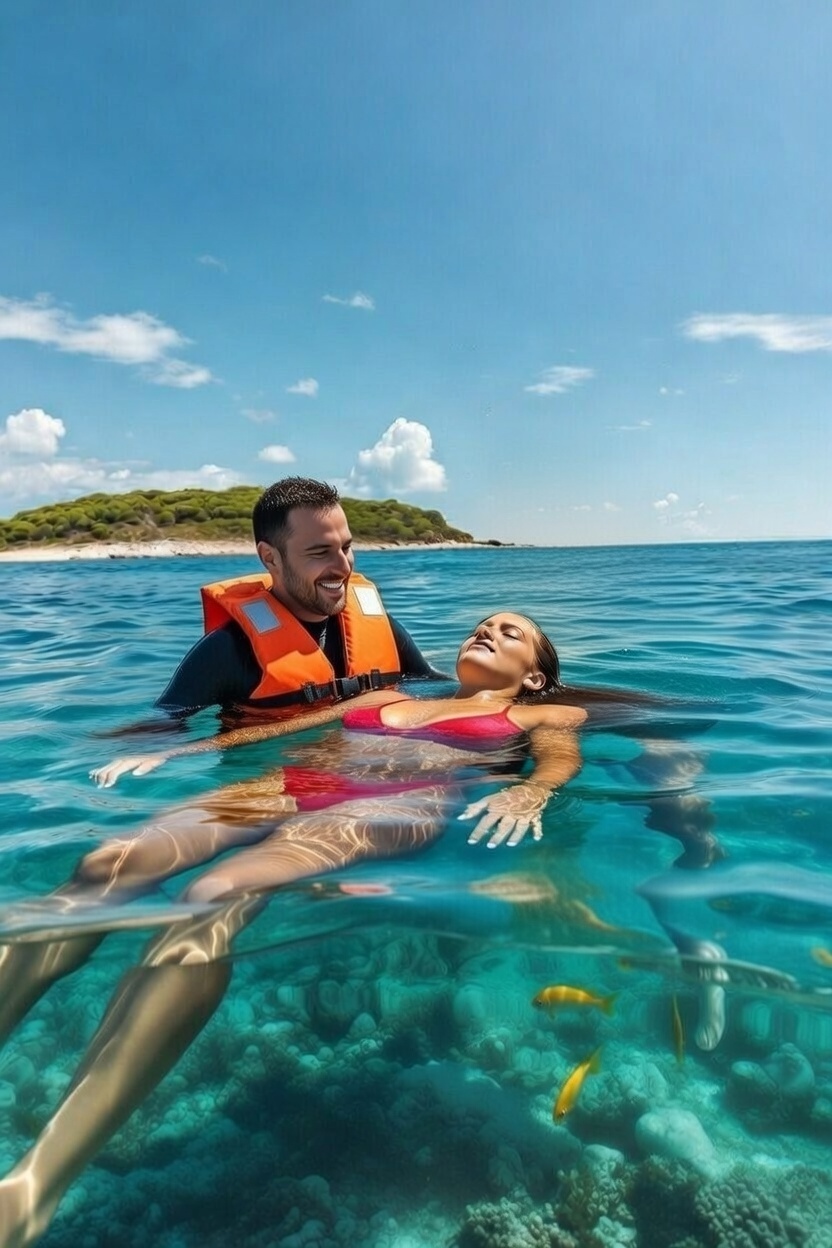
Over the next hour, Marko gave her patient lessons: floating, breathing, simple strokes. She improved — not perfectly, but enough to feel the water as friend, not threat.
From then on, Marko asked every guest personally: "Can you swim confidently?" If the answer wavered, a life jacket went on — no exceptions. The near-miss had sharpened his rule, and Lena's story became a quiet reminder among the crew: beauty can hide danger, but respect turns it into wonder.